Sunday, April 20, 2025

Folklore in children's literature: "The Princess and the Warrior: A Tale of Two Volcanoes" by Duncan Tonatiuh

 "The Princess and the Warrior: A Tale of Two Volcanoes" by Duncan Tonatiuh is a picture book that tells the story of how two volcanoes were formed, the Popocatépetl and Iztaccíhuatl. The story follows the love story of an Aztecan princess, Iztaccíhuatl who falls in love with Popocatépetl, a warrior. Saddened by the news of Popocatépetl's death, Iztaccíhuatl falls into an eternal sleep. Upon returning alive, Popocatépetl finds Iztaccíhuatl in her slumber and takes her to the mountains where the two become the volcanoes Popocatépetl and Iztaccíhuatl. The book explores themes of love, sacrifice, and delves into Aztec mythology. The artwork features bold, sharp illustrations that are similar to traditional Aztecan artwork. The illustrations follow the narrative and encompass the storyline beautifully. "The Princess and the Warrior: A Tale of Two Volcanoes" is categorized as folklore due to the focus on Aztec folklore and mythology, following the legend behind the creation of two volcanoes in the region. 

A classroom activity for students aged 8-10 after reading "The Princess and the Warrior: A Tale of Two Volcanoes", would be to have students break down the story using a timeline identifying the introduction, rising action, climax, and resolution. This story has a very clear sequence of events and would assist students in identifying key events and aspects of literature, while simultaneously educating them on other cultures and mythology. 

Works Cited

TonatiTonatiuh, Duncan. The Princess and the Warrior: A Tale of Two Volcanoes. New York, Abrams Books For Young Readers, 2016.


Thursday, April 10, 2025

Science Fiction in Children's Literature: "The Homesick Astronaut: Can Oscar Ride His Scooter in Space?" by Golia Kalicka

 "The Homesick Astronaut: Can Oscar Ride His Scooter in Space?" by Golia Kalicka follows the story of a child named Oscar reflecting on his desire to live in space with his toys. They discuss facts about gravity and Earth but also question if Oscar can ride his scooter in outer space, enjoy lollipops, or play with monkey bars while in space. Oscar recognizes his desire to be home and with activities that he would miss if he lived in space. This book touches on themes of adventure and curiosity and fits into the category of science fiction as the events occurring in space throughout the story are not plausible in real life. 

The illustrations in this story are whimsical and fun, flowing with the curious nature of the story itself and the sequence of events. The illustrations appear to be done in watercolor with a slight collage style that keeps images visually interesting. They do not detract from the story and relate to what is being read on the page. 

I think this book is a fun adventure book that answers abstract questions children may have about space. It allows them to be creative and adventurous while also recognizing the simplicity of home. This book can be used in the classroom during a science unit. Students could be given a blank box to draw what they think they could or could not do in space. Children would then share with the class what their drawing represents and discuss as a class the science behind the possibility of completing said task in space. 


Sunday, March 30, 2025

Literary Analysis of Children's Fantasy, "Bear's New Friend," by Karma Wilson

 "Bear's New Friend," by Karma Wilson, illustrated by Jane Chapman, is a fun fantasy tale of a bear in the woods who gathers all of his friends in search of a noise they all heard. Throughout the story, each character tells Bear that they did not make a noise, and they all ask "Who?", only to be greeted by a shy owl. This story covers themes of friendship, overcoming fears, and asking questions. This book fits into the animal fantasy subgenre of fantasy, as it demonstrates animals with humanlike qualities such as speaking, asking questions, and making friends. The illustrations are very soft with muted colors that don't come across as overwhelming. They go along with the narrative of the story and are whimsical and offer realism in the animals' features. This book can be used in class to explore themes such as shyness, making friends, and navigating social situations. For grammar-centric classes, a worksheet can be filled out after reading where students identify nouns, verbs, and adjectives present in the story to gauge their understanding of literary elements and sentence structure. 

I personally find this story very light-hearted, fun, and an excellent way to teach children about shyness and navigating making friends. I think this story can help uplift children who are afraid to reach out to new people and encourage them to overcome their fear. 


Thursday, March 27, 2025

Multicultural Children's Literature: "Blue Sky White Stars (Un Cielo Azul Blancas Estrellas)" by Sarvinder Naberhaus

 "Blue Sky White Stars (Un Cielo Azul Blancas Estrellas)" by Sarvinder Naberhaus is a children's book that briefly describes American history with a reflecting statement written in Spanish. This book tells the tale of togetherness and historical events of becoming one nation and celebrates the differences of the people within our nation. This book fits the multicultural genre by recognizing and celebrating the differences of people of our nation and reiterates the entirety of the book in Spanish. The artwork depicts individuals of multiple ethnicities coming together as one. The illustrations use rich colors and realism to emphasize the significance of our history as a country and importance of the varying cultures and ethnicities present within it. An activity to accompany this book could be writing out a chart of Spanish words and creating posters about the book in Spanish. This would help the class better understand the language in the book and bring the class together to celebrate their differences. 


Children's Poetry Analysis: "Daniel Finds a Poem" by Micha Archer

 "Daniel Finds a Poem" is a children's book by Micha Archer. The book explores a young boy named Daniel questioning what poetry is. Throughout the book, he asks about poetry and various animals in nature respond with different phrases. By the end of the book, Daniel put together each phrase to comprise a poem, where he finally understands what poetry is. "Daniel Finds a Poem" is an example of free verse poetry as it does not follow traditional rhyme schemes or word patterns. However, the final poem pieces together to form a rhythmic flow comprised of natural elements as well as alliteration. This illustrations in this book contain rich and vibrant artwork with soft line work. The illustrations reflect the innocence of childhood and set a soft tone and mood. There are also elements of collage work within the artwork, adding texture to the illustrations and making the artwork interesting to look at. The shape and design of the illustrations are reminiscent of children's artwork, which add to the theme of learning and growth within a child. 

This text would be beneficial in the classroom as you can use it as a way to teach children how to write poetry and see poetry in the things around them. An activity to do after reading could include taking the class outside to observe different elements of nature and describing them. They could then take those ideas and inspiration from the book to turn their findings into poetry. This book is especially helpful in teaching young children how to write poetry as it is free verse and has limited rules on structure, making following the writing style easy for them to understand. 


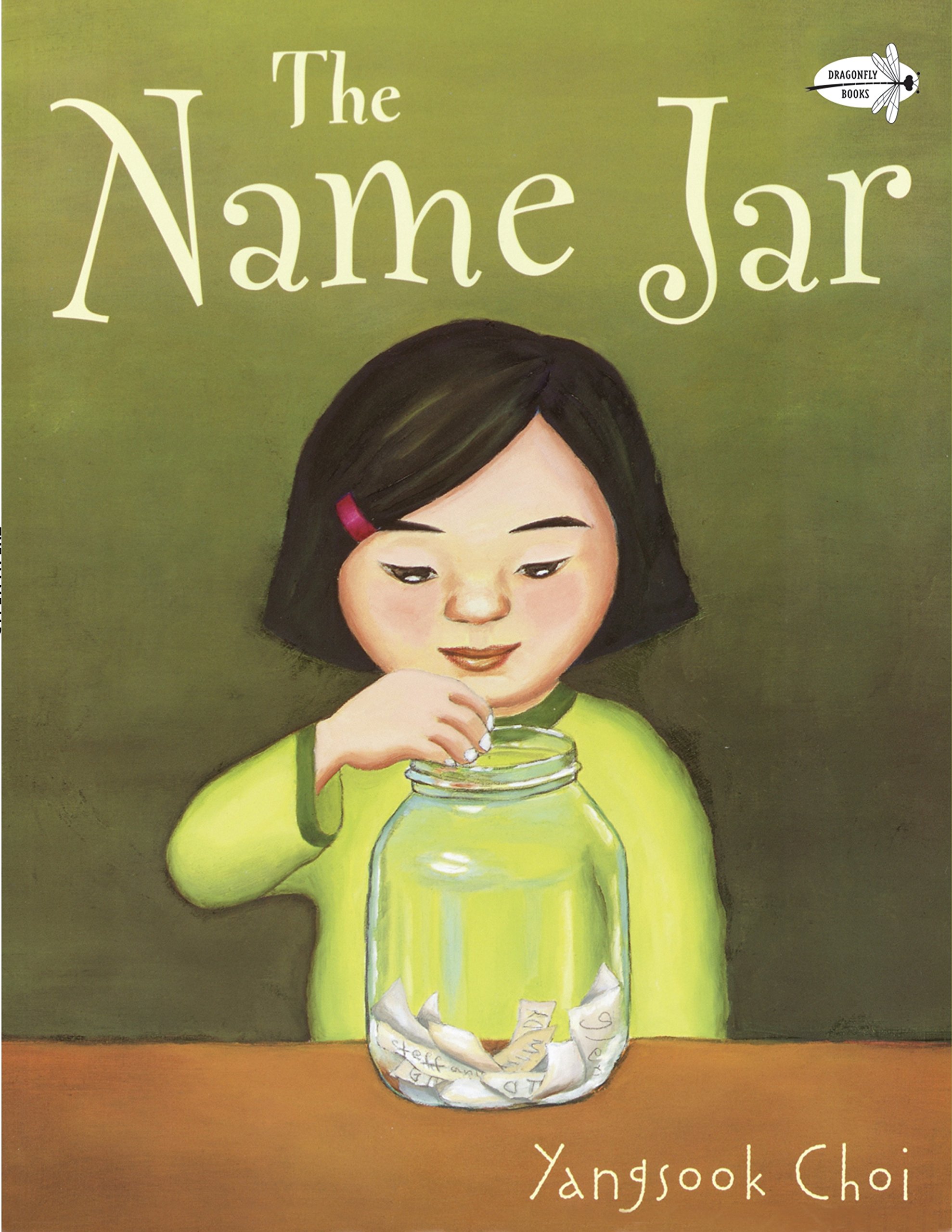
"The Name Jar" by Yangsook Choi

  "The Name Jar" by Yangsook Choi is a multi-cultural picture book that follows the story of Unhei who moved to America from Kore...